The Hidden Threat in City Water: Why You Must Remove Chloramine
If you live in a city or suburb, you likely trust your municipal water supply. However, what many homeowners and facility managers don't realize is that their water source can fluctuate heavily—often drawing from multiple wells or reservoirs with varying hardness and chemical levels.
Even more concerning is a hidden threat that standard water tests completely miss: Chloramine.
Here is why chloramine is so dangerous to your home’s plumbing and water treatment system, and why a standard carbon filter isn't enough to stop it.
What is Chloramine, and Why is it Hidden?
To reduce the formation of harmful Disinfection Byproducts (DBPs), many modern municipal water systems have switched from using free chlorine to chloramine (a combination of chlorine and ammonia) for disinfection.
The Trap: Standard water tests (like DPD drops) only measure free chlorine. Chloramine is a "combined" chlorine, meaning your water can test completely negative for chlorine, yet still be loaded with chloramine.
The Damage: Destroying Resin and PEX Pipes
Because it is a highly stable compound, chloramine stays in the water much longer than chlorine—which is great for the city, but terrible for your home.
It Kills Water Softener Resin: If you run chloraminated water directly into a standard water softener, the chloramine will chemically oxidize the ion exchange resin. Over time, the resin beads will literally shatter, lose their softening capacity, and need a complete and expensive replacement.
It Degrades PEX Piping: If your home uses PEX (plastic) piping, continuous exposure to chloramine causes the plastic to degrade. This can lead to microplastics and chemicals leaching into your drinking water and premature pipe failures.
It Ruins RO Membranes: Just like chlorine, chloramine will permanently oxidize and destroy Thin-Film Composite (TFC) Reverse Osmosis membranes.
The Solution: You Need Catalytic Carbon
Standard granular activated carbon (GAC) is generally ineffective against chloramine. To break the strong chlorine-ammonia bond, you need Catalytic Carbon.
How it works: Catalytic carbon has a modified surface structure that accelerates the chemical reaction, effectively breaking apart the chloramine molecule and removing it from the water.
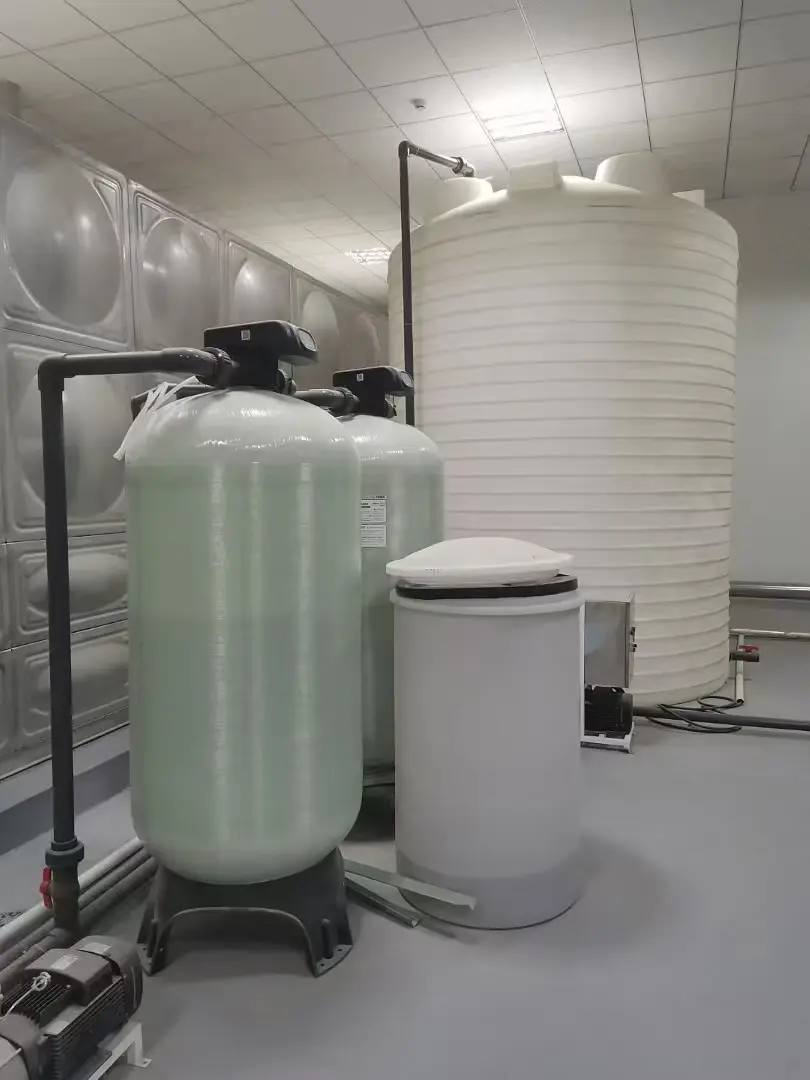
The Benefit: By installing a catalytic carbon filter before your softener, you protect your expensive resin, extend the life of all your downstream fixtures, and ensure your family isn't drinking or bathing in degraded plastic compounds.
The Ultimate Treatment Train
If you are designing a robust whole-house water system, the order of equipment is critical:
Step 1: Catalytic Carbon Filter (To remove chloramine)
Step 2: Water Softener (To remove hardness)
Step 3: Under-Sink RO System (For pure, safe drinking water)
❓ Frequently Asked Questions (FAQ)
Q: Can a standard activated carbon filter remove chloramine?
A: No. Standard carbon filters have very low capacity for chloramine removal. You must use a specifically designed Catalytic Carbon filter with a sufficient empty bed contact time (EBCT).
Q: How do I know if my city uses chloramine?
A: You can check your municipality's annual Consumer Confidence Report (CCR). If they use chloramine, standard chlorine test kits will show zero, but you can buy specific chloramine test strips.
Q: Will chloramine ruin my Reverse Osmosis (RO) system?
A: Yes. Like chlorine, chloramine will destroy polyamide RO membranes. A catalytic carbon pre-filter is mandatory to protect the RO system.
Upgrade Your Whole-House System Today
Don't let chloramine silently destroy your plumbing and equipment. At QJ Water Treat, we manufacture high-quality catalytic carbon filters and complete, customized whole-house water treatment trains. With over 15 years of manufacturing experience, we provide reliable OEM/ODM solutions for global distributors.
👉 Contact our engineering team today to build your custom treatment system!