
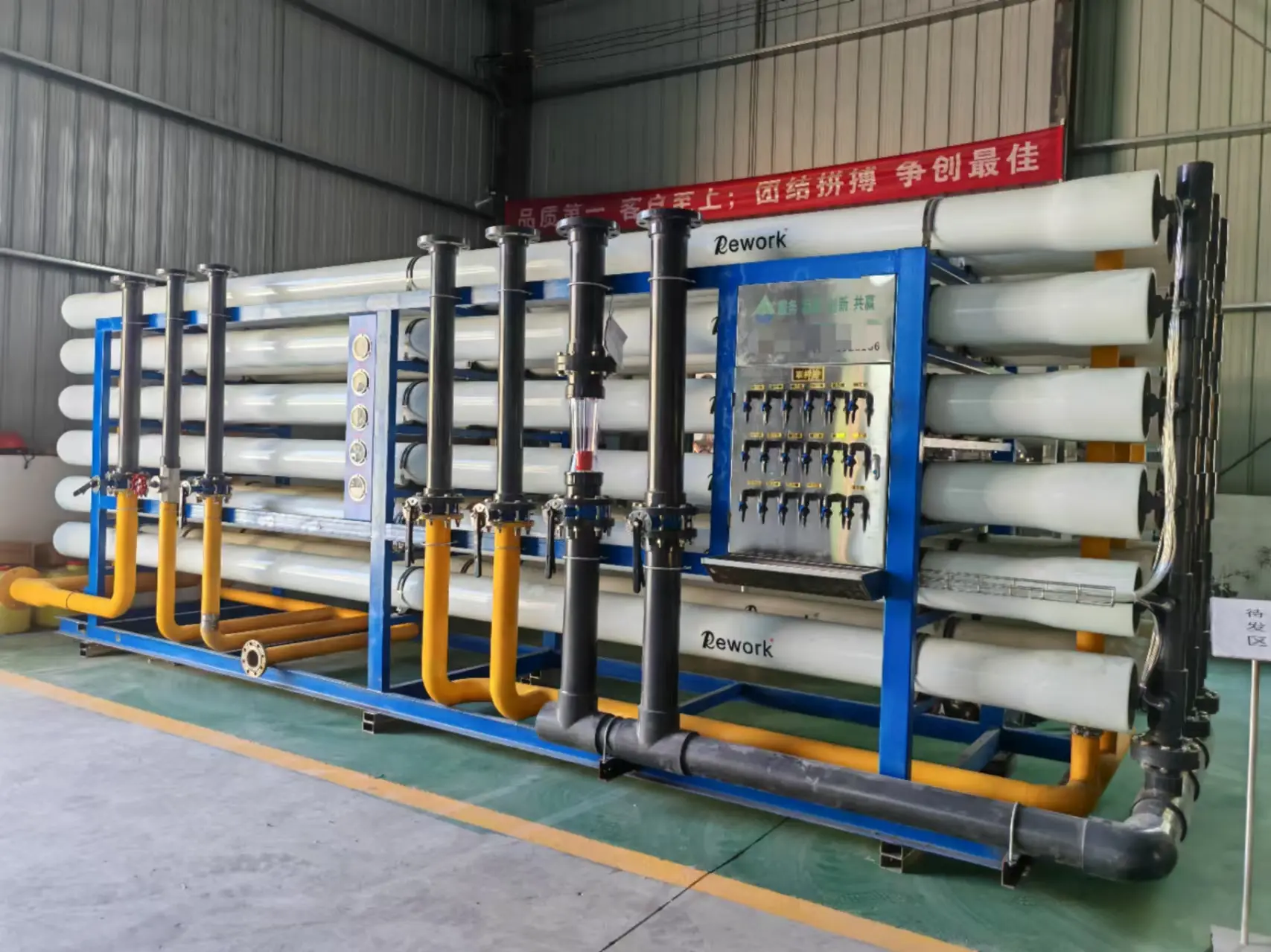
SWRO vs. BWRO: How to Choose an Industrial Desalination System
Seawater reverse osmosis (SWRO) is designed for seawater and generally needs higher pressure, more corrosion-resistant wetted components, and closer attention to energy recovery. Brackish water reverse osmosis (BWRO) typically operates at lower pressure and can achieve higher water recovery when scaling is controlled. Start with feedwater salinity to identify the right membrane family. Then confirm the design using a full water analysis, the required product water quality, and the options for managing concentrate.
SWRO vs. BWRO at a Glance
Design factor | Seawater reverse osmosis (SWRO) | Brackish water reverse osmosis (BWRO) |
|---|---|---|
Typical feedwater | Open-ocean seawater is around 35,000 mg/L total dissolved solids (TDS). Some sources are saltier. | Brackish groundwater is commonly defined as 1,000–10,000 mg/L TDS. |
Feed pressure | A typical seawater operating range is 55–70 bar (about 800–1,015 psi). | A feed containing a few thousand mg/L TDS may operate at 10–20 bar (about 145–290 psi). |
Water recovery | Around 40–50% is typical in conventional designs. Salinity, product water targets, and equipment limits affect the result. | Often higher than SWRO. Published ranges span 50–90%, depending on salinity, scaling potential, and system design. |
Main design priorities | High-pressure operation, chloride corrosion, intake pretreatment, and energy recovery. | Scaling control, feed-specific pretreatment, and concentrate management. |
Energy recovery | Commonly evaluated for projects with substantial high-pressure pumping demand. | Evaluate when concentrate pressure, flow, and operating hours can justify the equipment. |
These figures are starting points for comparing technologies. Project specifications should come from a membrane projection that accounts for feed composition, temperature range, production flow, and product water requirements.
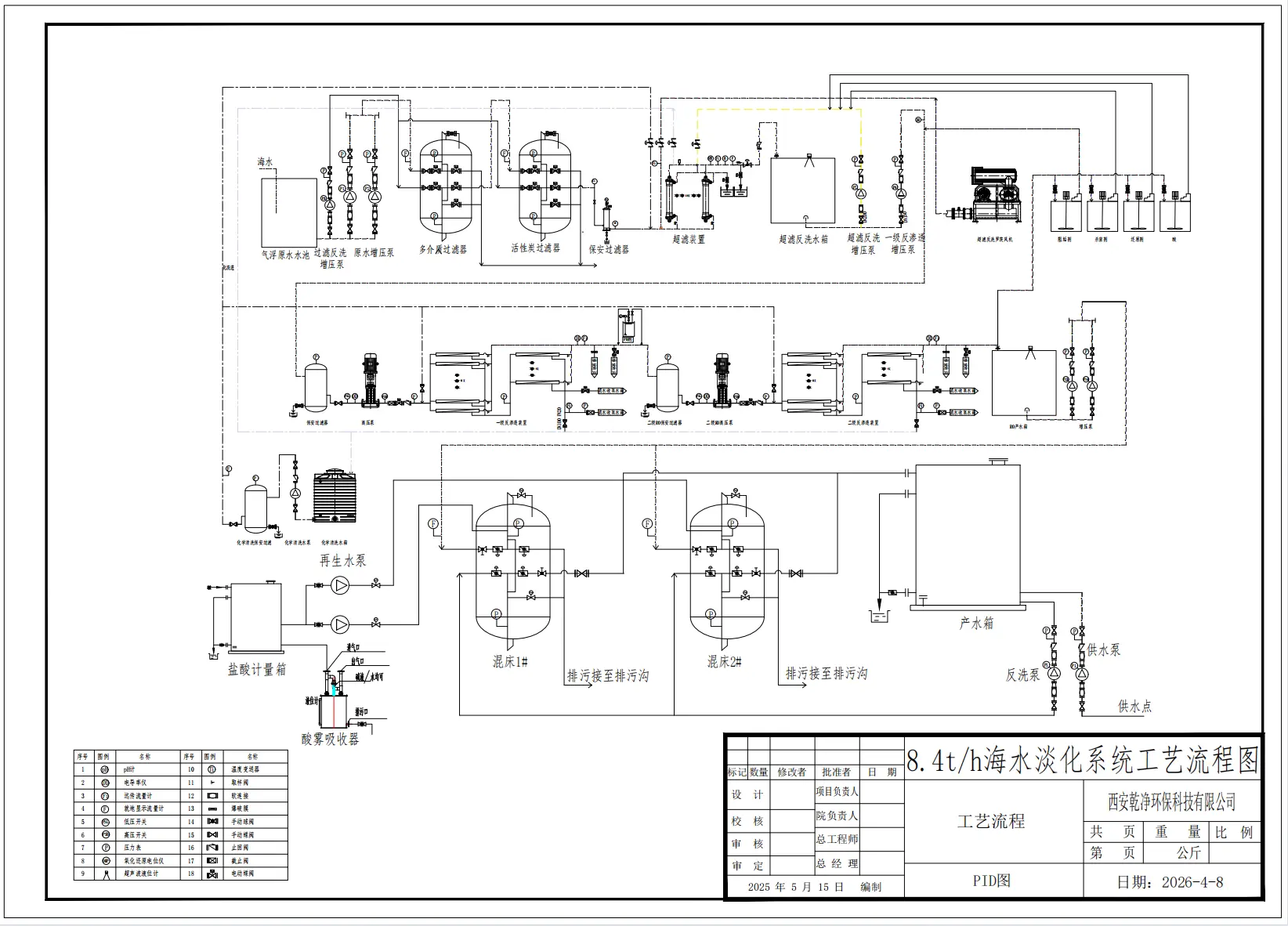
When to Choose Seawater Reverse Osmosis
Choose an SWRO system when your feed is seawater. Its higher salinity raises the osmotic pressure the pump must overcome. As recovery increases, the remaining concentrate becomes saltier, which can increase pressure demand and affect permeate quality. If the end use has a boron limit, include it in the membrane projection and evaluate whether a second RO pass is needed.
For larger or continuously operated systems, compare proposals with an energy recovery device (ERD). A pressure exchanger transfers pressure from the outgoing concentrate to incoming seawater, reducing the load on the high-pressure pump. Ask suppliers to report specific energy consumption (SEC) in kWh per m³ of product water and identify which loads are included. Intake pumps, pretreatment, and a second RO pass can change the total.
Specify wetted materials by service. Super duplex stainless steel is one option for high-pressure seawater piping and other chloride-exposed components. Confirm pressure rating and corrosion compatibility separately for the feed, concentrate, and permeate lines.
When to Choose Brackish Water Reverse Osmosis
Choose a BWRO system when brackish groundwater or another moderately saline source falls within the selected membrane’s design limits. Lower salinity generally reduces pumping pressure, but calcium carbonate, sulfates, and silica can limit how much water the system can recover. Use a concentrate scaling projection to determine whether softening, antiscalant dosing, or pH adjustment is appropriate. If well water contains dissolved iron or manganese, evaluate oxidation and removal upstream of the RO membranes. Select filtration according to the particles and colloids present after pretreatment.
Recovery example. An RO system producing 10 m³/h of permeate at 40% recovery takes in 25 m³/h of membrane feedwater and produces 15 m³/h of concentrate. At 75% recovery, the same permeate output requires about 13.3 m³/h of feedwater and produces about 3.3 m³/h of concentrate. The calculation covers the RO stage. Include pretreatment backwash and downstream water losses when sizing the full plant.
How SWRO and BWRO Fit into High-Purity Water Systems
Start with the water specification at the point of use. Boiler makeup and semiconductor manufacturing, for example, can have very different requirements. Define conductivity or resistivity and any relevant limits for silica, boron, or total organic carbon. Then check whether the RO permeate can meet those targets directly or needs additional treatment.
Second-pass RO further reduces the dissolved-ion load and can help bring first-pass permeate within downstream equipment specifications.
Electrodeionization (EDI) continuously removes residual ions without routine acid or caustic resin regeneration. Verify that RO permeate meets the selected EDI module’s limits for hardness, silica, and conductivity equivalent, including the contribution of dissolved CO₂.
Mixed-bed ion exchange can provide final ionic polishing where an industrial high-purity or ultrapure water (UPW) specification calls for it.
Frequently Asked Questions
Can a BWRO skid be converted to SWRO?
A membrane replacement alone is insufficient. Check the existing pump, pressure vessels, piping, valves, instrumentation, and wetted materials against seawater operating and design conditions. If major components need replacement, compare the retrofit cost and performance with a purpose-built SWRO skid.
What should I compare when reviewing SWRO operating costs?
Compare electricity use per cubic metre of product water at the same feed conditions and product water quality. Include pretreatment chemicals, filters and membranes, cleaning, maintenance, and concentrate handling in the operating-cost estimate. Use the same operating hours and plant boundary across proposals.
How do you control biofouling in SWRO and BWRO?
Design pretreatment around the feedwater and monitor conditions that contribute to fouling. If the pretreatment uses chlorine, verify that the selected RO membrane’s oxidant exposure limits are met. For conventional polyamide membranes, this generally means dechlorination upstream of the membrane.
Request a Desalination System Quote
QJ Water Treatment designs and manufactures industrial SWRO and BWRO systems. Depending on your feedwater and target quality, we can integrate pretreatment, chemical dosing, second-pass RO, EDI, or mixed-bed polishing into the same treatment line.
Send us your feedwater analysis, required production flow in m³/h, and target product water quality. If available, include the feedwater temperature range, daily operating hours, and concentrate discharge constraints. Our engineering team can use these inputs to propose a treatment process and prepare a project-specific quote.