
Manganese in Well Water: Testing and Treatment Options
Clear well water can still contain dissolved manganese. Although dark stains or sediment may draw attention to a problem, appearance alone cannot tell you how much manganese is present—or which treatment system will work.
For homes, farms, hotels and commercial facilities using groundwater, the right starting point is a laboratory water test. Treatment should then match the manganese concentration, other water conditions and required flow rate.
What Is Manganese in Well Water?
Manganese is a naturally occurring element that can enter groundwater from surrounding rocks and soil. In low-oxygen groundwater, it commonly occurs as dissolved manganese, which may not be visible when water first leaves the well.
After oxidation, manganese can form insoluble particles. These may contribute to dark staining and deposits in plumbing or water storage equipment. However, black sediment alone does not confirm manganese contamination; laboratory testing is needed to identify the cause.
Is Manganese Only a Staining Problem?
Manganese deserves attention beyond its effect on appearance. Drinking-water guidance distinguishes between aesthetic concerns, such as staining, and health considerations.
For example, Australia’s drinking-water guidelines specify a health-based manganese value of 0.1 mg/L and an aesthetic value of 0.05 mg/L at the customer’s tap. These are Australian guideline values, not universal limits. Compare your laboratory results with the requirements and public-health advice applicable to your location.
Removing visible stains is therefore not sufficient evidence that drinking water meets the required quality. A treatment system needs a defined outlet target and testing to verify performance.
What Should You Test Before Choosing a Manganese Filter?
A manganese result is essential, but it does not provide every detail needed for system design.
For an initial treatment assessment, consider the following:
Parameter | Why It Matters |
|---|---|
Total manganese | Establishes the concentration that treatment must address |
Total iron | Identifies an additional contaminant load that may affect the treatment process |
Dissolved and particulate iron/manganese, where needed | Helps distinguish material requiring oxidation from particles already suitable for filtration |
pH and alkalinity | Help assess treatment conditions and whether pH adjustment is needed |
Hardness | Identifies a separate need for softening |
Turbidity | Indicates suspended material that may require pretreatment |
Colour and organic matter, where suspected | Help investigate yellow or brown water and possible treatment interference |
Follow the laboratory’s sampling instructions, particularly when testing dissolved metals.
Manganese testing also does not replace a broader well-water safety assessment. In the United States, CDC recommends annual private-well testing for total coliform bacteria, nitrates, TDS and pH, with additional testing based on local concerns.
How Is Manganese Removed from Well Water?
Several treatment methods are available. The appropriate choice depends on the water analysis and operating conditions.
Oxidation Followed by Filtration
A common approach converts dissolved manganese into insoluble particles and then captures those particles in a filter.
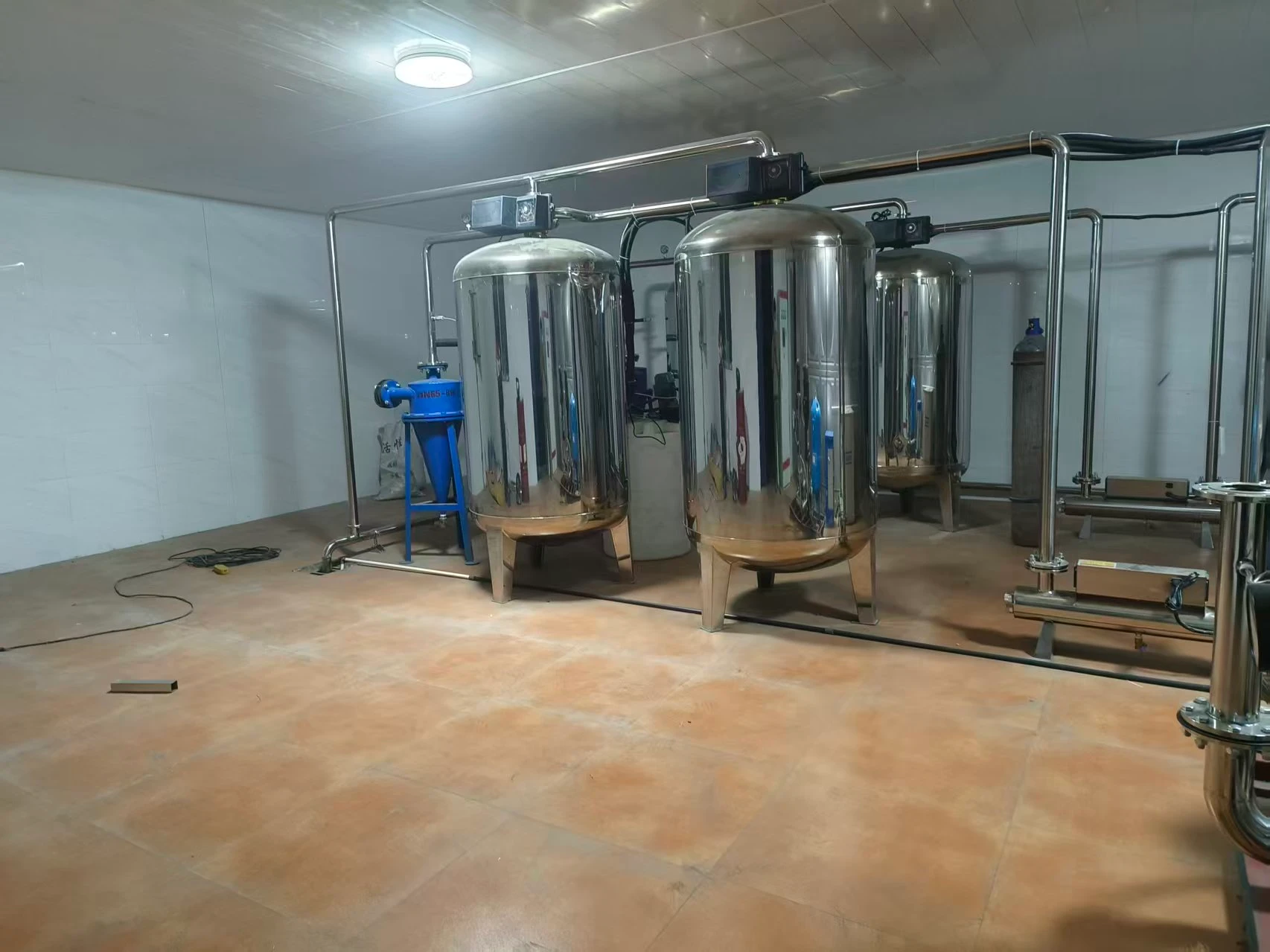
The oxidation stage and filter must work together. Depending on the design, the process may use catalytic filter media or chemical oxidation followed by filtration. Some systems combine oxidation and filtration within one treatment vessel.
Water pH can affect treatment performance. Iron and manganese associated with organic matter may also require a different approach from straightforward dissolved-metal removal. A filter should therefore be selected for the actual water chemistry rather than by tank size alone.
Ion Exchange
Softening or ion exchange can remove manganese under suitable conditions. However, the ability of a particular softener to handle manganese must be checked against its design limits and the complete water analysis.
For equipment selection, ask the supplier to confirm the acceptable iron and manganese concentrations, regeneration requirements and expected treated-water quality.
Other Treatment Methods
Biological filtration and other specialist processes may also be considered. Their suitability depends on the application, operating conditions and available maintenance support. There is no single treatment method that fits every well.
Can an Iron Filter Also Remove Manganese?
Some systems are designed to remove both iron and manganese, but the label “iron filter” does not establish manganese-removal performance.
Before selecting a combined system, request confirmation of:
The acceptable inlet iron and manganese concentrations.
The required pH range and any pretreatment.
Whether oxidant dosing, regeneration or media conditioning is necessary.
The rated service flow and required backwash flow.
The treated-water target and how performance will be verified.
These details make equipment offers easier to compare and help identify whether additional treatment stages are required.
How Should a Manganese Removal System Be Sized?
Daily water consumption is only part of the sizing process. The system also needs to handle peak demand and complete its cleaning cycle properly.
Provide the equipment supplier with:
Information | Design Purpose |
|---|---|
Peak operating flow | Establishes the required treatment capacity during busy periods |
Daily consumption and operating hours | Help estimate loading and operating schedules |
Available pump flow and pressure | Allow service and backwash requirements to be checked |
Drainage capacity | Determines whether backwash discharge can be accommodated |
Required outlet quality | Defines the treatment objective |
Need for continuous supply | Helps determine whether parallel or standby equipment is appropriate |
A proposed design should explain how the available water supply will meet the filter manufacturer’s backwash requirements.
What Might the Treatment Process Look Like?
For a site with dissolved iron and manganese, a preliminary process could be:
Well water → pH adjustment if needed → oxidation/contact stage → iron and manganese filtration → additional treatment required for the intended use
Not every site needs every stage. Softening, organic-matter removal, disinfection or membrane treatment should be added only when the water quality and application justify them.
A domestic supply, a hotel and a factory using well water as RO feed may have different treatment objectives, even when they use similar source water.
How Do You Confirm That Treatment Is Working?
Agree on a verification plan before purchasing equipment.
Sample the untreated water and treated water at clearly identified points. Where possible, check performance under representative operating conditions, including normal peak demand. Keep records of water-test results, pressure changes, backwash settings and maintenance.
For drinking-water applications, manganese removal is one part of the assessment. Other relevant contaminants must also meet the applicable requirements.
Frequently Asked Questions
Can manganese be present in clear well water?
Yes. Dissolved manganese may be present without visible particles. Water clarity cannot replace a laboratory manganese test.
Will a sediment cartridge remove dissolved manganese?
A conventional sediment cartridge captures particles. It should not be relied on to remove manganese that remains dissolved. An appropriate treatment process may first need to convert it into a filterable form.
Is a water softener enough?
It may be suitable under specific conditions, but suitability must be confirmed using the water report and the equipment’s operating limits. Hardness removal alone does not demonstrate manganese-removal performance.
What should I send when requesting a quotation?
Send a recent water analysis, the water’s intended use, peak flow, daily consumption, available pump pressure and flow, and installation conditions. Include details of any existing treatment equipment.
Discuss Your Well Water Treatment Requirements
From the freezing winters of Canada to the arid mining regions of Australia, QJ Water Treat provides custom manganese removal systems designed for harsh local conditions.
QJ designs and manufactures water treatment equipment for groundwater and commercial applications.
Send your water test report, required flow rate and application to discuss an iron and manganese removal system suited to your project.