4 Key Steps to Design a Wastewater Recycling RO System
In today’s manufacturing environment, discharging industrial wastewater is expensive and environmentally damaging. More factories are turning to wastewater recycling treatment equipment to reuse water for cooling towers, boiler feed, or process washing.
However, designing a Reverse Osmosis (RO) system for wastewater is very different from designing one for tap water. Wastewater is highly unpredictable and contains high levels of organics, suspended solids, and variable salinity.
Here are the 4 critical steps to design a reliable RO system for industrial wastewater recycling.
Step 1: Comprehensive Water Analysis
You cannot design a system without knowing exactly what is in the water. Before selecting any equipment, we must analyze:
COD and BOD levels: High organics will cause rapid bio-fouling on the RO membranes.
TSS (Total Suspended Solids): Must be reduced to near zero before reaching the RO.
Heavy Metals and Oil: These can permanently destroy the membrane elements.
TDS and Conductivity: Determines the required operating pressure.
Step 2: Robust Pre-treatment (The Most Important Step)
In wastewater recycling, the RO membrane is only as good as its pre-treatment. To protect the RO system, the process usually includes:
Biological Treatment: (e.g., MBR) to break down organic matter.
Ultrafiltration (UF): UF is mandatory for wastewater. It acts as a perfect barrier against bacteria, colloids, and suspended solids, ensuring the water entering the RO is extremely clean.
Chemical Dosing: Accurate dosing of antiscalants and biocides to prevent scaling and bacterial growth.
Step 3: Selecting the Right RO Membranes
Standard RO membranes will fail quickly in wastewater applications. When designing the system, engineers must specify:
Fouling-Resistant Membranes: These have a special surface coating that makes it easier to wash away organic dirt during cleaning.
Wide Spacer Channels: (e.g., 34 mil) to prevent the feed channels from clogging and to reduce pressure drop.
Double-Pass RO: If the recycled water is for high-pressure boilers, a double-pass RO system is often required to achieve ultra-pure water quality.
Step 4: Concentrate (Brine) Management
Recycling wastewater creates a concentrated brine stream. This stream cannot just be discharged. You must plan for:
Discharge Permits: Meeting local municipal regulations.
Zero Liquid Discharge (ZLD): Using evaporators or high-pressure RO to recover 95%+ of the water, leaving only solid waste.
❓ Frequently Asked Questions (FAQ)
Q: What is the typical water recovery rate for wastewater RO?
A: It depends on the water quality. Usually, it ranges from 50% to 70%. Our engineers adjust the recovery rate to prevent scaling.
Q: Can you build a containerized wastewater recycling system?
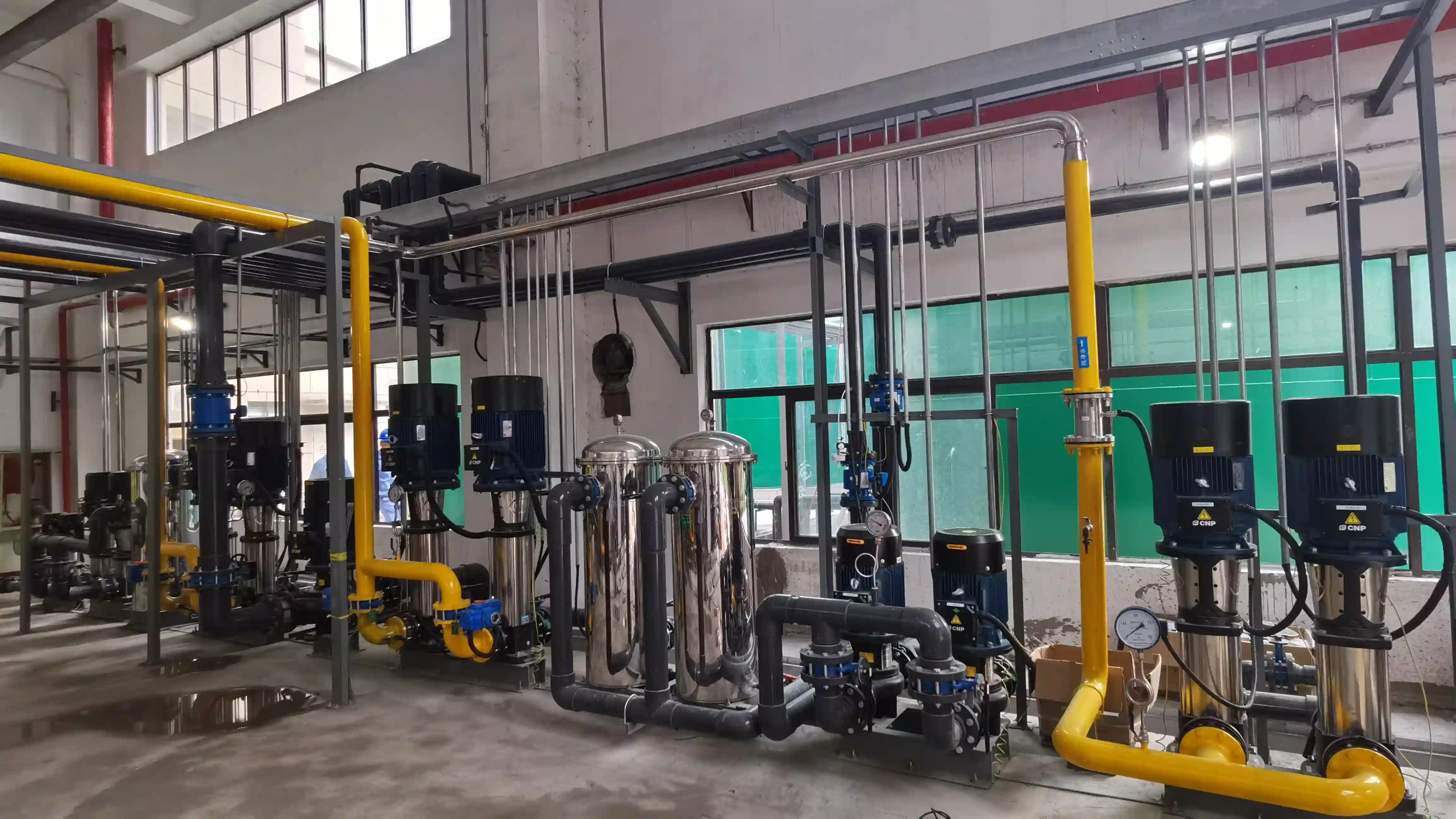
A: Yes. We are an OEM factory. We can build containerized or skid-mounted systems to save installation time at your site.
Build a Customized Wastewater Recycling System
At QJ Water Treat, we don't just sell RO membranes. We are a direct manufacturer with 15+ years of experience. We design and build complete wastewater recycling treatment equipment tailored to your exact water quality and flow rate.
👉 Contact our engineering team today to get a custom design!