
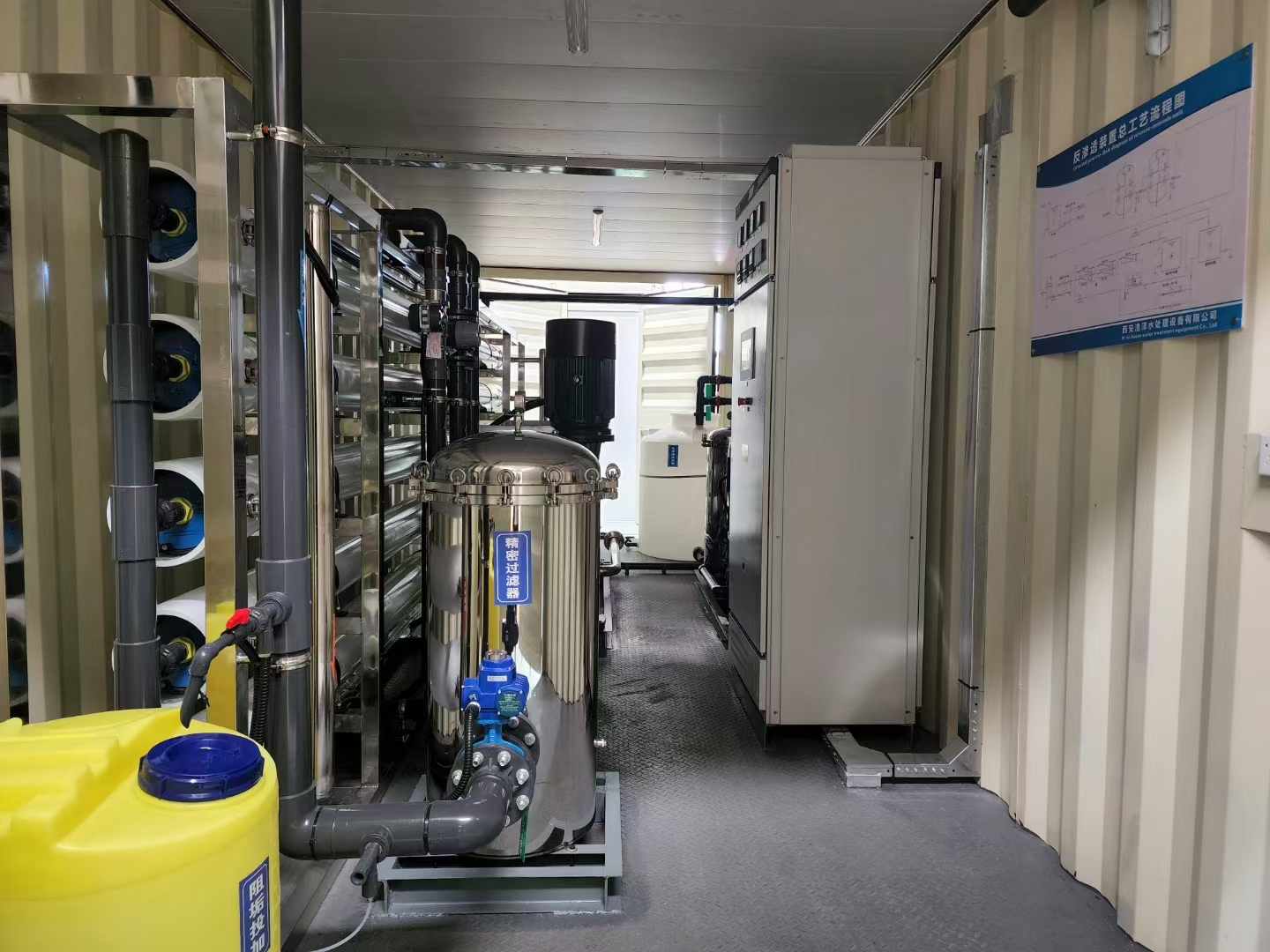
Designing and executing an industrial desalination project engineering plan is a massive capital investment. However, the long-term return on investment (ROI) relies entirely on how the system is maintained after commissioning.
Seawater is highly corrosive and contains complex biological and chemical impurities. Unlike standard brackish water systems, desalination plants operate under extreme high pressure. To ensure stable water supply and extend equipment lifespan, operators must focus on these critical daily maintenance tips.
1. Strict Monitoring of Pre-treatment Systems
In desalination engineering, pre-treatment is the first line of defense. If raw seawater isn't treated properly, it will rapidly foul the RO membranes.
Monitor SDI (Silt Density Index): The SDI of the feed water entering the RO membranes must be kept strictly below 3.0 (ideally < 2.0).
Chemical Dosing Check: Ensure that coagulants, flocculants, and antiscalants are dosed at precise rates. Overdosing can cause biological growth, while underdosing leads to scaling.
2. High-Pressure Pump and Energy Recovery Device (ERD) Care
The high-pressure pump and ERD are the "heart" of any desalination plant, consuming the majority of the system's energy.
Vibration Analysis: Conduct daily vibration checks on the pumps. Abnormal vibrations usually indicate bearing wear or cavitation.
Seal Inspection: Because seawater is highly corrosive, pump mechanical seals are prone to wear. Check for micro-leaks regularly to prevent catastrophic failure.
3. RO Membrane Performance Tracking
Operators should log daily parameters to track membrane health. If you notice the following trends, immediate action (such as a Chemical In-Place cleaning) is required:
Normalized Permeate Flow: A drop of 10-15% indicates fouling.
Salt Rejection Rate: A sudden drop in water quality (rising TDS in permeate) might mean O-ring damage or membrane degradation.
Pressure Drop: An increase in differential pressure across the pressure vessels means the feed channels are clogging.
4. Corrosion Control and Material Integrity
When executing an industrial desalination project engineering design, top-tier materials (like Duplex or Super Duplex stainless steel) are usually specified. However, maintenance teams must still check:
Piping and Flanges: Look for rust stains or salt crystallization, which indicate micro-leaks.
Valve Actuation: Ensure all automated valves operate smoothly, as salt deposits can cause them to seize up.
❓ Frequently Asked Questions (FAQ)
Q: How often should RO membranes in a seawater desalination plant be cleaned?
A: Typically, chemical cleaning (CIP) is required every 3 to 6 months, depending on the effectiveness of the pre-treatment and the seawater quality.
Q: Why is Energy Recovery Device (ERD) maintenance so critical?
A: The ERD recovers up to 95% of the pressure energy from the brine stream, drastically reducing operational costs. If the ERD fails, the plant's energy consumption will skyrocket.
Need Reliable Engineering Support?
From process design to complete equipment manufacturing, QJ Water Treat provides world-class industrial desalination project engineering solutions. Our systems are built with heavy-duty materials to withstand extreme saline environments.
👉 Contact our engineering team today to discuss your seawater treatment project!