
How to Remove Tannins from Well Water: The Complete Guide
If you turn on your tap and the water looks like weak tea or has a yellowish-brown tint, you likely have a tannin problem.
While tannins are not usually an immediate health hazard, they make water unappealing, cause a musty taste, and can stain plumbing fixtures. More importantly, tannins will rapidly destroy downstream water treatment equipment, especially Reverse Osmosis (RO) membranes.
Here is what causes tannins and the most effective ways to remove them.
What Causes Tannins in Well Water?
Tannins are natural organic compounds created when vegetation (leaves, roots, wood) decays. When rainwater seeps through the soil into your well, it picks up these organic acids. High levels of tannins are commonly found in wells surrounded by heavy vegetation, swamps, or peat bogs.
Why Are Tannins Dangerous to Your Water System?
Aesthetic Issues: They cause yellow/brown stains on laundry, sinks, and showers, and give the water an earthy, bitter taste.
Membrane Destruction: Tannins carry a strong negative charge and are highly soluble. If you feed tannin-heavy water into an RO system, it will cause severe organic fouling, destroying the membranes in a matter of weeks.
Resin Poisoning: If you use a standard water softener, tannins will coat the resin beads, preventing them from removing hardness.
The 3 Most Effective Ways to Remove Tannins
Method 1: Anion Exchange (The Best Solution)
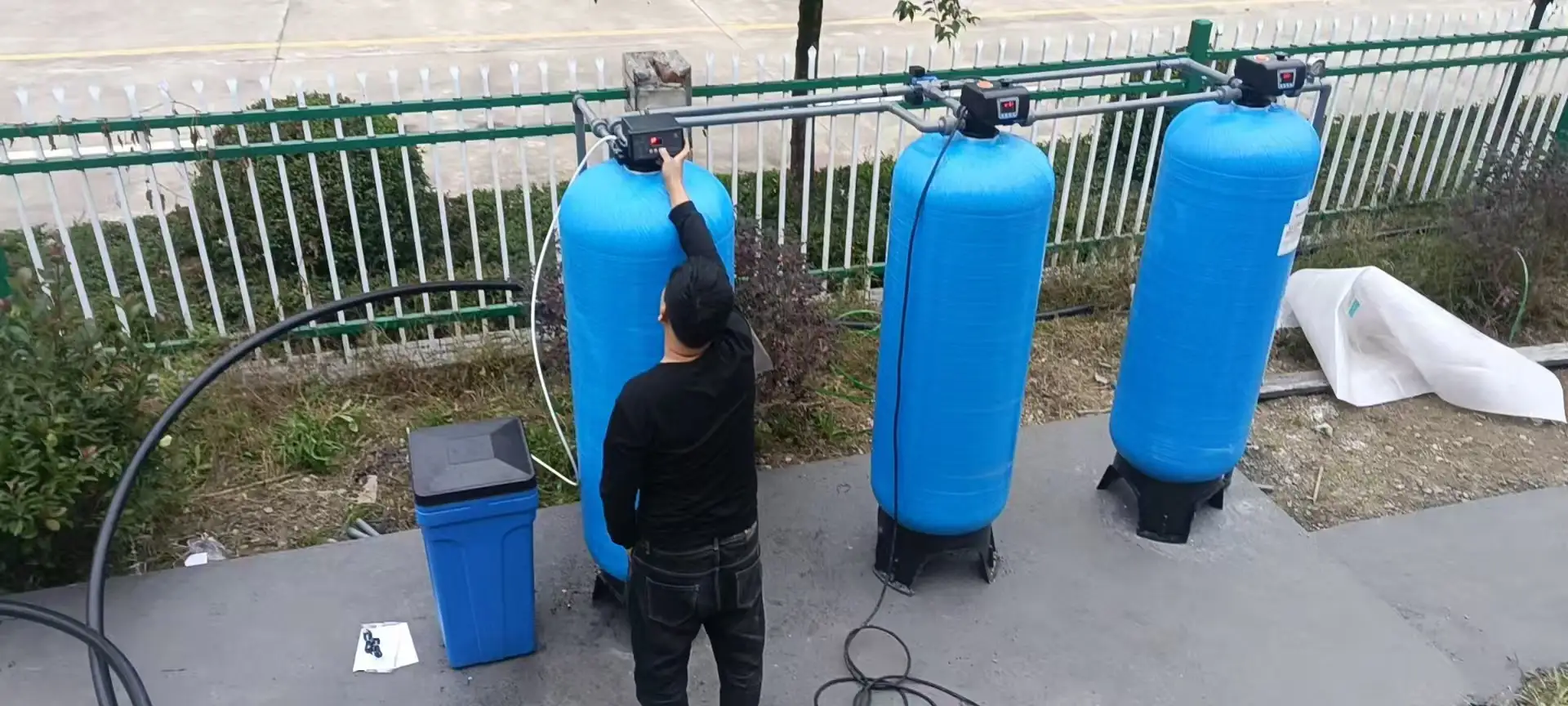
Because tannins carry a negative charge, the most effective treatment is an Anion Exchange (Organic Scavenger) system.
How it works: The water passes through a tank filled with special anion resin. The resin swaps the tannin molecules for chloride ions. The water comes out clear and clean.
Maintenance: The resin must be regenerated periodically using standard salt (NaCl), just like a water softener.
Method 2: Oxidation (For Light Tannins)
For low to moderate levels, oxidizing agents like Ozone or Hydrogen Peroxide can be used.
How it works: The strong oxidants break the complex tannin molecules into smaller, harmless compounds.
The Catch: You must use a precise chemical dosing system. Overdosing can create other issues, and the treated water usually requires a follow-up multimedia or carbon filter to remove the broken-down organics.
Method 3: Reverse Osmosis (For Drinking Water)
If you only need to treat tannins at the kitchen faucet, an under-sink RO system is excellent.
How it works: The RO membrane physically blocks the tannin molecules.
The Catch: Do not use RO as a whole-house solution if tannin levels are high, as the membrane will foul very quickly. It must be used as a point-of-use device.
The Ideal Treatment Train for High Tannins
If you have a complex well with iron, manganese, and tannins, here is the professional equipment sequence:
Oxidation/Filtration: Remove iron and manganese first.
Anion Exchange: Remove the tannins using an organic scavenger tank.
Water Softener: Soften the water (optional, depending on hardness).
RO System: For final pure drinking water.
❓ Frequently Asked Questions (FAQ)
Q: Can a standard water softener remove tannins?
A: No. A standard cation exchange softener removes calcium and magnesium. It cannot remove negatively charged organic tannins. You need a specialized anion exchange (organic scavenger) system.
Q: Is water with tannins safe to drink?
A: The EPA does not strictly regulate tannins in private wells, but they are not considered highly toxic. However, their presence indicates surface water infiltration and potential bacterial issues, and it makes the water taste bad.
Q: How do I test for tannins in well water?
A: You can use a simple DIY test strip, or send a water sample to a certified laboratory. If your water turns yellow when you add a few drops of bleach, it is a strong indicator of tannins.
Build a Reliable Well Water System
At QJ Water Treat, we manufacture custom-engineered filtration systems designed for the toughest water challenges. Whether you need anion exchange systems for tannin removal or complete industrial RO trains, our 15+ years of manufacturing experience ensure you get a reliable solution.
👉 Contact our engineering team today with your water analysis!