
If you rely on a well or a borehole for your water supply, you know the frustration: you install a brand-new 5-micron or 25-micron cartridge filter, and just a few days or weeks later, the water pressure drops to zero. You open the housing, and the filter is completely caked in sand and sediment.
Many homeowners and even facility managers try to solve this by buying higher-quality or even finer filters. This is a mistake.
Using fine cartridge filters to catch heavy sand is like using a paper towel to stop a mudslide. Cartridges are designed for "polishing" water, not for bulk removal. If your filters are failing fast, your pre-treatment is completely missing.
Here is how to fix it properly.
Mistake: Using Fine Cartridges for Bulk Sand
A 25-micron or 5-micron filter is designed to catch tiny particles. When you feed raw well or borehole water full of sand into it, the filter acts as a physical barrier. It traps everything instantly, causing a massive pressure drop. You end up spending a fortune on replacement cartridges every month.
The Fix: Backwashable Pre-treatment Systems
To remove sand effectively without constantly buying new filters, you need equipment that can clean itself. There are two main solutions:
1. Hydrocyclone Sand Separators (For Heavy Sand)
If your borehole has a high concentration of sand (especially after heavy rain or when the water table drops), a hydrocyclone is the best first line of defense.
How it works: It uses centrifugal force to spin the water. The heavy sand is thrown to the outside walls and dropped into a collection chamber at the bottom, while the clean water flows out the top.
Why it's great: It has no moving parts, requires no electricity, and you simply purge the sand trap occasionally. It saves your downstream filters entirely.
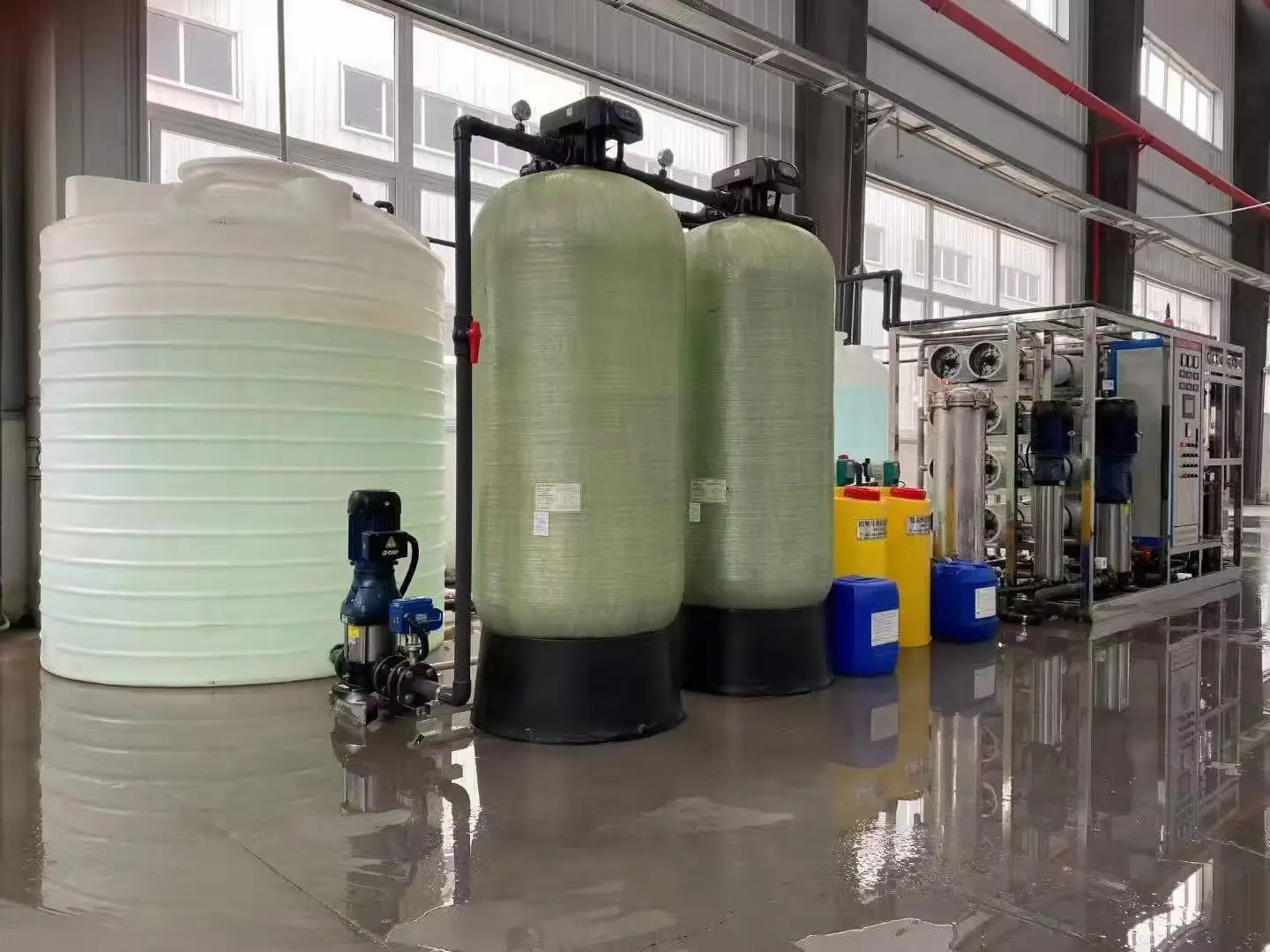
2. Multimedia Filters (For Fine Sediment & Turbidity)
If your water has finer silt, clay, or general turbidity, a multimedia filter is required.
How it works: It uses layers of different filter media (like gravel, sand, and anthracite) to trap sediment.
The Magic of Backwashing: Instead of replacing cartridges, the system has a control valve that automatically reverses the water flow (backwash) once a week. This flushes the trapped sand and dirt down the drain, restoring the filter media so it can last for years.
The Ideal Setup for Well & Borehole Water
Do not put a fine cartridge directly after the submersible pump. The correct sequence is:
Borehole Pump -> Hydrocyclone Sand Separator -> Multimedia Filter -> 5-Micron Cartridge -> Carbon Filter / Softener.
This ensures your expensive cartridge filters and softener resin only deal with microscopic impurities, increasing their lifespan by over 10 times.
❓ Frequently Asked Questions (FAQ)
Q: Can a standard water softener remove sand?
A: No. A water softener uses ion exchange resin to remove hardness minerals. Sand will bypass the softening process and accumulate in the resin tank, eventually ruining the control valve.
Q: What micron filter should I use for well or borehole water?
A: For bulk sediment and sand, do not use micron cartridges. Use a backwashable multimedia filter. If you need a final polishing filter after pre-treatment, use a 5-micron or 10-micron cartridge.
Q: How often does a multimedia filter need to backwash?
A: Usually every 1 to 3 days, depending on your water usage and sand levels. The automated control valve (like a Fleck or Clack valve) handles this automatically.
Build a Reliable Sand Removal System
Stop wasting money on replacement cartridges. At QJ Water Treat, we have over 15 years of manufacturing experience building backwashable multimedia filters and complete well and borehole water treatment trains for global B2B buyers.
👉 Contact our engineering team today with your water analysis and daily flow rate!