Municipal water treatment plants add chlorine to water to kill bacteria, viruses, and other pathogens. This is essential for public health. However, when water reaches your home or your industrial facility, the remaining amount of chlorine—known as residual chlorine—can pose serious risks.
From skin irritation to destroying expensive industrial membranes, here is what you need to know about the hidden dangers of residual chlorine and how to remove it.
1. The Health Risks of Residual Chlorine
While drinking small amounts of chlorinated water isn't immediately life-threatening, long-term exposure and high concentrations can affect human health:
Skin and Hair Dryness: Showering in chlorinated water strips the skin of its natural oils and can cause skin irritation, eczema flare-ups, and dry hair.
Respiratory Irritation: When you take a hot shower, chlorine turns into a gas (chloroform). Inhaling this gas can irritate the lungs and trigger asthma or respiratory issues.
Digestive Issues: High levels of chlorine can disrupt the beneficial bacteria in your gut, leading to digestive discomfort.
Disinfection Byproducts (DBPs): Chlorine reacts with organic matter in the water to form Trihalomethanes (THMs), which are linked to an increased risk of certain cancers over a lifetime of exposure.
2. The Industrial Danger: Chlorine Destroys RO Membranes
For B2B buyers and plant managers, residual chlorine is a critical threat. If you are using tap water or municipal water for your Industrial Reverse Osmosis (RO) system, you cannot feed it directly into the machine.
Oxidation: The polyamide thin-film composite material used in most RO membranes is highly sensitive to oxidants. Residual chlorine will chemically destroy the membrane structure.
Irreversible Damage: Once a membrane is oxidized by chlorine, its salt rejection rate plummets, and it cannot be cleaned or repaired. It must be replaced, which is extremely costly.
3. How to Effectively Remove Residual Chlorine
Removing residual chlorine is a standard pre-treatment step. Here are the most reliable methods:
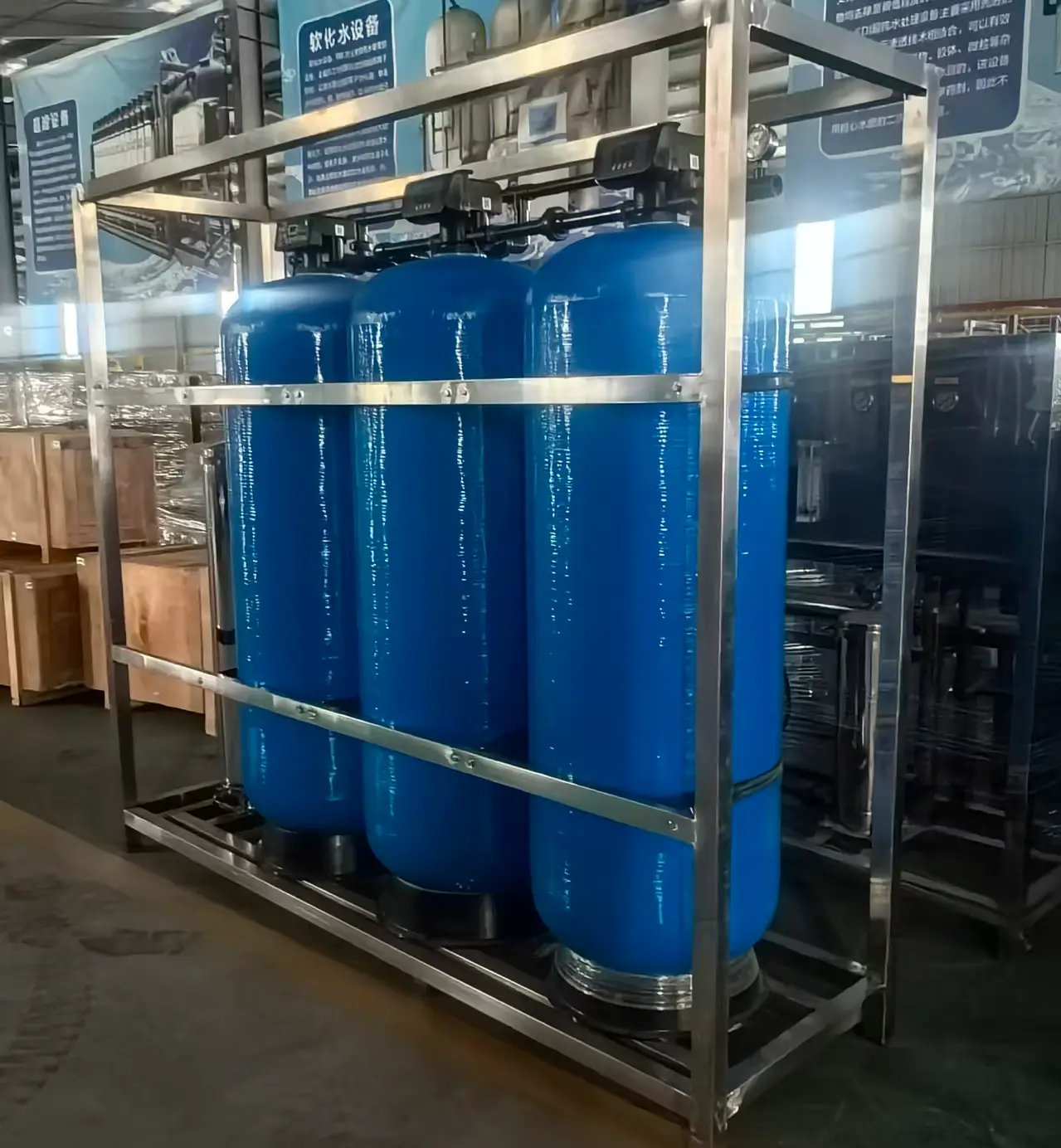
Method A: Activated Carbon Filtration (GAC / CTO)
Granular Activated Carbon (GAC) is the most common household and commercial solution. The carbon neutralizes chlorine through a chemical reaction.
Best for: Point-of-use drinking water, small commercial systems, and pre-treatment for small RO systems.
Method B: SBS (Sodium Bisulfite) Dosing
For large-scale industrial RO plants, dosing a precise amount of food-grade Sodium Bisulfite (SBS) is the industry standard.
How it works: SBS chemically neutralizes chlorine instantly. It is injected into the water right before it enters the RO membranes.
Best for: High-flow industrial water treatment, ensuring 100% protection of the RO membranes.
Method C: UV Light
UV systems do not remove chlorine, but they are often installed after carbon filtration to provide a chemical-free final barrier against bacteria.
❓ Frequently Asked Questions (FAQ)
Q: Can I boil water to remove residual chlorine?
A: Yes, boiling water will cause chlorine to evaporate into the air. However, boiling will not remove Disinfection Byproducts (DBPs) that have already formed, and it is not a practical solution for industrial use.
Q: What is the maximum safe level of chlorine in drinking water?
A: The U.S. EPA requires a residual chlorine level of at least 0.2 mg/L in the distribution system to kill bacteria, and sets the maximum limit at 4.0 mg/L (4 ppm) to prevent health risks and bad taste.
Q: How do I know if my RO system is getting chlorine damage?
A: If you notice a sudden, sharp drop in water quality (TDS of the permeate rises significantly) and a huge increase in salt passage, the membranes may have been oxidized by chlorine.
Protect Your RO System with QJ Water Treat
Whether you need a commercial point-of-use filter or a complete industrial RO plant, proper pre-treatment is the key to long-term reliability.
At QJ Water Treat, we have over 15 years of experience designing water treatment systems. Every industrial RO system we manufacture includes precise SBS dosing and carbon pre-treatment to protect your membranes and ensure safe, pure water.
👉 Contact our engineering team today to discuss your water treatment requirements!