
Seawater Reverse Osmosis (SWRO) for Australian Mining
Seawater reverse osmosis (SWRO) can provide a dependable source of low-salinity water for Australian mines and mineral processing facilities with access to seawater. For coastal operations and sites served by a seawater or product-water pipeline, SWRO can reduce reliance on freshwater supplies. At inland mines, brackish water reverse osmosis (BWRO) or mine water reuse may be more practical, depending on feedwater chemistry, pipeline distance, power availability and concentrate management.
When is seawater desalination a good fit for a mine?
SWRO is worth evaluating when a mine or processing plant has a viable coastal intake, a clear route for concentrate discharge and a steady demand for low-salinity water. Compare the options using the cost per cubic metre delivered to the point of use. Include intake, pretreatment, electricity, water transfer, storage and concentrate management in the comparison.
Water source and site conditions | Option to evaluate | Key design question |
|---|---|---|
Coastal site with access to seawater | Seawater reverse osmosis (SWRO) | Can the project support a viable intake, outfall and power supply? |
Inland site with access to coastal supply | Coastal SWRO with a product-water pipeline | How do pipeline distance and elevation affect delivered water cost? |
Inland site with brackish groundwater | Brackish water reverse osmosis (BWRO) | What do bore-water chemistry, sustainable yield and concentrate disposal allow? |
Site with mine dewatering or process return water | Fit-for-purpose treatment and reuse | Which water streams can be reused, and what treatment does each end use require? |
Australian example from the Pilbara
In March 2026, Rio Tinto and the Western Australian Government announced a joint venture to complete both stages of the Dampier Seawater Desalination Plant. The announced capacity is 8 GL per year once both stages are operational. The project is designed to supply the West Pilbara Water Supply Scheme and reduce demand on regional aquifers.
Match water quality to the end use
Start with a site water balance. Identify daily and peak demands for mineral processing, equipment washdown, dust suppression and camp services. Define the required water quality for each use. For example, process or boiler make-up water may require additional treatment, while dust suppression may be able to use a suitable lower-grade water source. Camp drinking water requires a validated treatment and monitoring approach, including post-treatment such as remineralisation and disinfection as appropriate.
Size the SWRO plant around its operating hours, storage and downtime. A plant delivering 200 m³/day in 20 operating hours needs a net delivery rate of 10 m³/h during those hours. Confirm whether the quoted capacity refers to RO permeate at the skid or usable water delivered to storage after any internal consumption and treatment losses.
Reduce pumping energy with an energy recovery device
An energy recovery device (ERD), such as an isobaric pressure exchanger, transfers pressure from the SWRO concentrate to the incoming seawater. This reduces the work required from the high-pressure pump. For sites operating on generator power or with limited electrical capacity, request both the peak electrical load in kW and the specific energy consumption in kWh/m³ of product water.
For comparable bids, ask suppliers to use the same feed salinity, temperature range, recovery rate and net capacity. Define which loads the kWh/m³ figure includes, such as intake pumping, pretreatment, container cooling, post-treatment and product-water transfer. Pressure exchanger efficiency and whole-plant electricity savings measure different things.
Design pretreatment for variable coastal seawater
Seawater quality can vary with intake location, storms, sediment and algal blooms. Use seasonal data on salinity, temperature, turbidity and algal activity to define the design conditions. Depending on intake water quality, pretreatment may include screening, dissolved air flotation (DAF) where algae or floatable solids are a concern, and multimedia filtration or ultrafiltration (UF). Final cartridge filtration can protect the RO stage from residual particles. Ask the supplier to specify the RO feed-water acceptance criteria and how the plant will operate during poor intake conditions.
Specify a containerised SWRO plant for the site
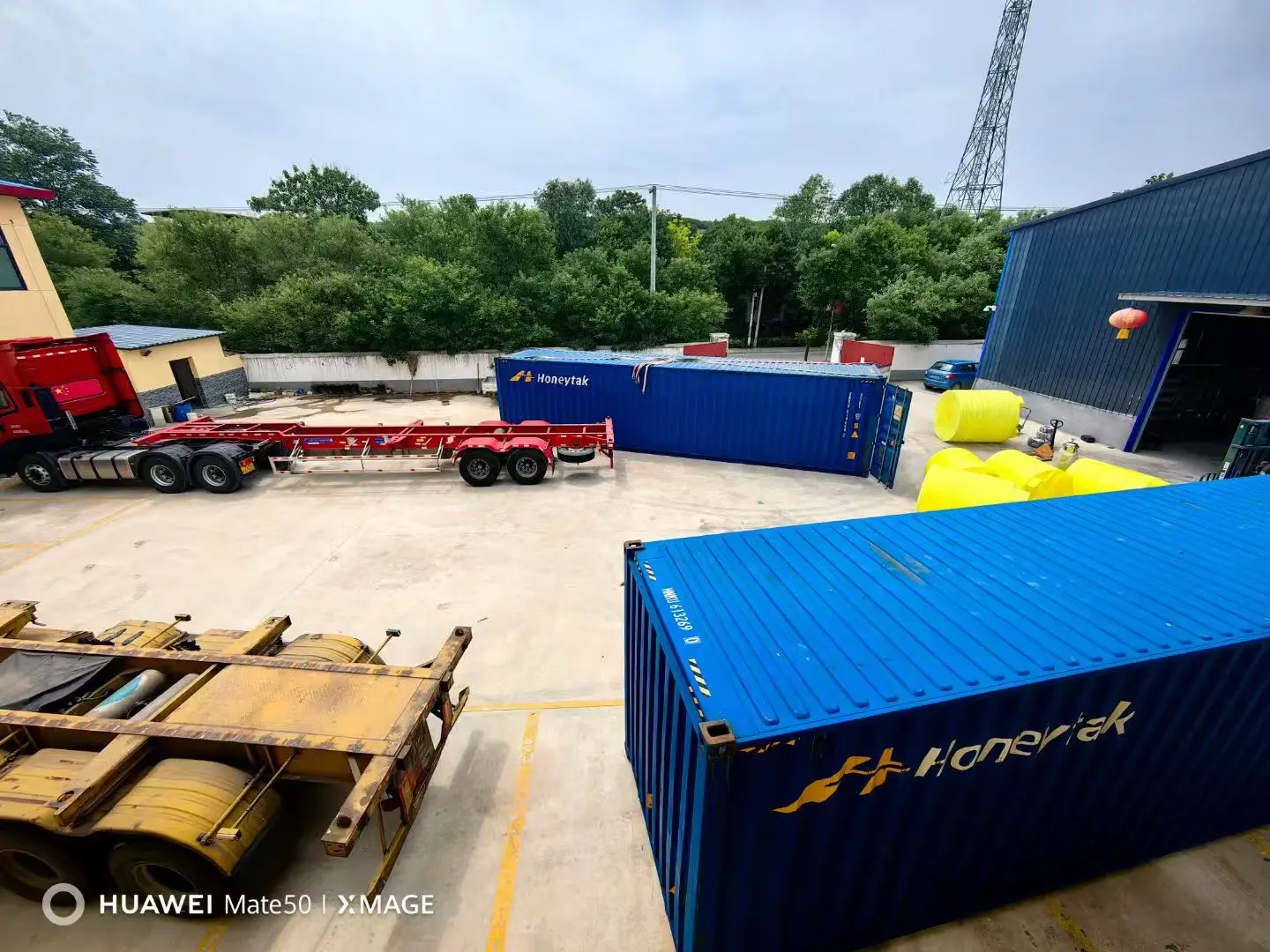
A containerised SWRO plant can reduce field assembly through factory installation, wiring and testing. Allow for site foundations, intake and discharge tie-ins, power and controls integration, and commissioning. For remote sites, confirm access for membrane replacement, pump maintenance and spare parts before approving the layout.
Corrosion resistance — Specify the wetted materials for high-pressure seawater piping, pumps and fittings based on chloride levels, temperature and pressure. Duplex or super duplex stainless steel may be suitable where specified by the project. Pressure-rated fibre-reinforced plastic (FRP) membrane housings are also available for SWRO duty.
Heat and dust — State the design ambient temperature, dust exposure and salt spray conditions. Ask for the enclosure protection rating, cooling capacity and ventilation strategy for the electrical equipment.
Factory acceptance testing (FAT) — Agree on the tests and acceptance criteria in the purchase specification. Identify which performance checks will take place during site acceptance testing (SAT) with the actual feedwater.
Frequently asked questions
How much water can a containerised SWRO plant produce for a mining camp?
Specify the capacity in m³/day of usable water and the daily production hours. Sizing depends on camp occupancy, peak demand, storage, feedwater conditions and planned maintenance. For a camp with varying occupancy, share both normal and peak water demand when requesting a quote.
Can SWRO treat high-turbidity coastal water?
Yes, provided the intake and pretreatment are designed for the expected range of turbidity, solids and algal activity. Ask the supplier to define the operating limits, the conditions that require a reduction in output or a shutdown, and how storage can cover those periods.
Can QJ manufacture SWRO skids for Australian mining EPC contractors?
QJ Water Treatment manufactures custom SWRO skids and containerised RO packages for engineering, procurement and construction (EPC) contractors. Share your electrical supply, PLC and communications requirements, materials schedule, and FAT scope so we can review the package against your project specification.
Request a desalination proposal for your mining project
Send QJ Water Treatment your site location, feedwater analysis, required net output in m³/day, product-water specification, available power supply and concentrate management plan. We can use those inputs to review the treatment train, identify site connections and prepare a quotation for your SWRO or BWRO package.